

316 UCB, 80309-0316
ATLAS Center 329 303-492-7574 303-492-1362

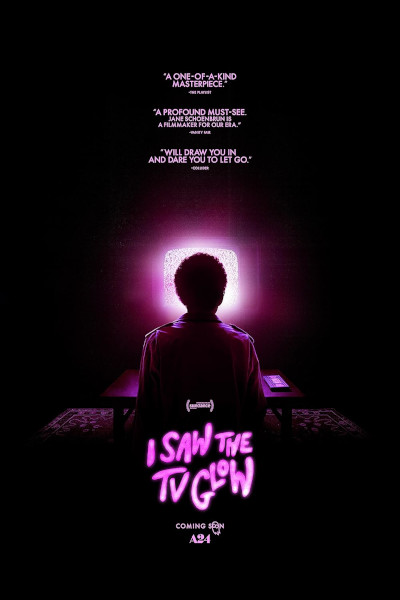
Jane Schoenbrun’s second narrative feature is a gnawing search for belonging in the static spaces between analog pixels. They stir dreamlike logic into scavenged memories, especially in a scene early in the film that grasps at how the medium of television’s celestial radiance can grant wide-eyed salvation in even the darkest room. A young Owen (Ian Foreman) gains permission from his mother Brenda (Danielle Deadwyler) to ostensibly sleepover at a classmate’s house. Instead, he ventures across manicured suburban lawns at night to visit Maddy (Brigette Lundy-Paine), a cynical older girl he only just met at school, and Maddy’s friend, who are watching the teen show “The Pink Opaque” on the Young Adult Network. Twist curls and a beaming smile mark Owen’s innocence, as well as his obvious desire for friendship and community. As surreal images of the show’s grotesque monsters and slippery mythology wisp pass him, he isn’t afraid. He is enthralled. That dopamine surge of recognition haunts Owen, and it’s one of the film’s many telling moments that has persistently beckoned me to return.
“I Saw the TV Glow” mostly takes place during Owen’s older teenage years, when arresting questions of identity, sexuality, and personhood often occur with urgency. A transformative Justice Smith takes the reins of Owen, playing this outcast with the wounded rawness of a permanent scar. Owen’s young adult years are stained by personal loss and his on-again, off-again friendship with Maddy, which takes shape through and around their shared love of “The Pink Opaque,” a show that feels like a throwback to “Buffy the Vampire Slayer.” The show provides a window into the crushing angst Owen feels but cannot name, while his direct addresses offer intermittent grounding for his self-sabotaging. The push-pull manages to lull the viewer into a quiet trance before unmooring them into a state of unbridled panic.
Far too often, when filmmakers graduate up the ledger, they become conservative, safe, and careerist; it feels like they’re making the current film solely with the mindset of remaining at the budgetary level they’ve just attained. With “I Saw the TV Glow,” the director’s glossy follow-up to their resourcefully executed “We’re All Going to the World’s Fair,” Schoenbrun films like a director who doesn’t want to live in regret of the shot they didn’t get, the risk not taken, the leap that never left the ground. The earworm original soundtrack, exciting practical effects, intoxicating photography, and risky editing—blending together conscious and imagined worlds—are the big, adventurous swings of an undaunted filmmaker.
That creative courage translates to the film’s arresting performances. Lundy-Paine is unwavering, playing Maddy as the kind of person whose direct exterior belies the pain seen in their closed in-frame and averted gaze. As Owen, Smith, at first, mirrors Lundy-Paine’s posture. But before long, following their characters’ emotional journeys, their shared physicality diverges: Lundy-Paine strikes a broad, self-assured pose, while Smith shrinks his chest to the point of being nearly caved in. Smith is especially incredible, transforming organically without ever feeling gimmicky. His body is thoughtfully unassured; his voice eventually rattles like a man who died long ago; his eyes become vacant orbs where defeat has found a cozy home. His late, climatically cathartic scream, which gives way to a blissful smile, reverberates with the same intensity of Schoenbrun‘s “I Saw the TV Glow”—looping like a rerun that always feels fresh and new, no matter how many times you’ve seen it before.
- Robert Daniels, rogerebert.com
Thu October 31, 2024, 7:30 PM, Muenzinger Auditorium
United States of America, 2024, in English, 100 min • official site
Director: Jane Schoenbrun, Writer: Jane Schoenbrun, Cast: Justice Smith, Brigette Lundy-Paine, Ian Foreman, Helena Howard, Lindsey Jordan
