

316 UCB, 80309-0316
ATLAS Center 329 303-492-7574 303-492-1362

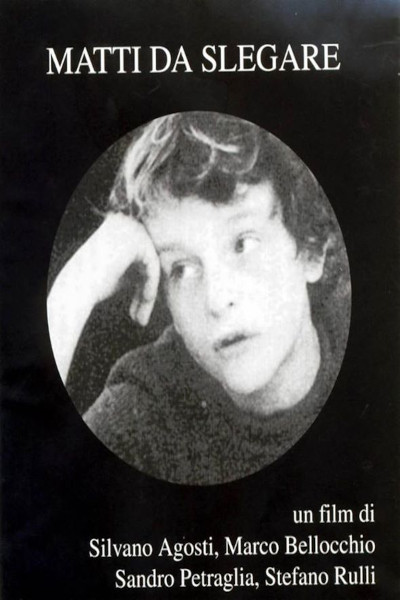
"Fit to be Untied", a thought-provoking documentary released in 1975, co-directed by Marco Bellocchio and Silvano Agosti, with collaboration from Sandro Petraglia and Stefano Rulli, delves into the lives of psychiatric patients within the confines of an Italian mental institution. This powerful and emotionally gripping film advocates for the reform of psychiatric care and sheds light on the often-overlooked humanity of those struggling with mental health issues. Through its cinema verité approach, the documentary presents an authentic and unfiltered portrayal of the patients' stories, giving them the agency to narrate their own experiences. "Fit to be Untied" emerges as a poignant and empathetic exploration of the complexities of mental illness and the urgent need for societal change.
Set within the walls of a psychiatric hospital in Colorno, Italy, "Fit to be Untied" unfolds as a deeply personal journey through the lives of patients like Paolo, Angelo, and Marco. Each individual becomes a narrator of their own story, breaking free from the shadows of anonymity that often accompany mental health discussions. As viewers, we are granted an unmediated glimpse into their struggles, dreams, hopes, and fears. This intimate approach shatters the stigma around mental illness, paving the way for empathy and understanding.
The documentary aligns itself with the ideas of Franco Basaglia, a leading Italian psychiatrist advocating for mental health reform. Through the patients' voices, "Fit to be Untied" becomes an unapologetic critique of the traditional psychiatric asylum system, questioning the efficacy of conventional treatment. The film bravely challenges societal norms and perceptions of mental illness, advocating for a more humane and inclusive approach to mental health care.
Directors Marco Bellocchio and Silvano Agosti act as compassionate mediators, creating an environment of trust that enables patients to share their stories openly and honestly. Their unintrusive yet participatory presence fosters an authentic connection with the subjects, allowing their voices to resonate genuinely without external interference. This directorial approach deepens the emotional impact of the film and reinforces its commitment to giving marginalized individuals a platform to be heard.
"Fit to be Untied" transcends the boundaries of the hospital setting, illuminating the patients' lives beyond the institution. By capturing their experiences in work, relationships, and hobbies outside the hospital, the documentary emphasizes the importance of reintegration and social acceptance. These glimpses into their lives humanize the patients, dispelling preconceived notions and highlighting their inherent worth and potential.
The choice of black and white cinematography in "Fit to be Untied" adds a timeless quality to the film. The monochrome visuals infuse the narrative with a sense of gravity and emotional depth, allowing the audience to connect on a profound level with the subjects' experiences. The film's technical aspects align seamlessly with its themes, making it an immersive and emotionally resonant cinematic experience.
"Fit to be Untied" stands as a powerful testament to the transformative potential of documentary filmmaking in effecting social change. Through its intimate portrayal of psychiatric patients' lives, the film challenges societal perceptions of mental illness, advocating for empathy, understanding, and reform. Decades after its release, "Fit to be Untied" remains a timeless and relevant cinematic exploration of human resilience and the pursuit of a more compassionate society. It is a must-watch for those seeking to gain deeper insights into the human condition and the vital role of cinema in driving positive societal change.
Sun April 19, 2:00 PM, Muenzinger Auditorium
Italy, 1975, in Italian, 135 min
Director: Marco Bellocchio, Silvano Agosti, Sandro Petraglia, Stefano Rulli, Cast: Silvano Agosti, Marco Bellocchio, Sandro Petraglia, Stefano Rulli
