

316 UCB, 80309-0316
ATLAS Center 329 303-492-7574 303-492-1362

They say that history does not repeat itself, but it rhymes. That may be why our turbulent and divisive times are reflected in films set half a century ago, a time of large protest gatherings and marches, many about the same social justice issues that are still contentious today: rights of people of color, rights of women, rights of LGBTA+ people, rights of people with disabilities, police brutality, end to armed conflict, accountability of elected officials. And so, we have “The Glorias,” “The Trial of the Chicago 7,” and the upcoming films “A Night in Miami,” and “Judas and the Black Messiah.” Even Robert Zemeckis’ remake of Roald Dahl’s “The Witches” is set in 1968.
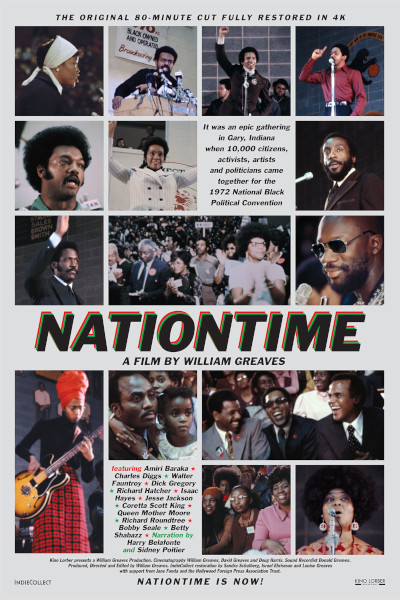
As powerful as these re-creations of the events, real and imagined, of the late ’60s and early to mid-’70s are, the documentaries using archival footage of era’s advocates are even more compelling. “Sisters of ’77” documented the National Women’s Conference, with appearances by three first ladies, feminist leaders like Gloria Steinem and Betty Friedan, and a young Maxine Waters. And William Greaves’ “Nationtime” lets us see many of the luminaries at the 1972 meeting of the National Black Political Convention held in Gary, Indiana. Such a roster includes Reverend Jesse Jackson, Dick Gregory, Coretta Scott King, Betty Shabazz, Mayor Richard Hatcher, Amiri Baraka, and Congressman Charles Diggs. “The Trial of the Chicago 7” eighth defendant, Bobby Seale, makes a stirring appearance emphasizing protest and voting.
“Nationtime” is a call to action, showing us how far we have come in some ways. Jackson notes in his electrifying speech that there were only 13 Black Members of Congress when proportionately “we are supposed to have 52.” Today there are 56 Black Members of Congress (plus 42 Hispanic, 17 Asian, and 4 Native American). The speakers call on the US to play more of a role in ending apartheid in South Africa. No one in 1972 Gary even thinks to imagine a Black President or a Black/South Asian female Vice-Presidential candidate. Indeed, other than the two widows, and a mention of Angela Davis, there are very few women featured in the film and there is no discussion of the particular concerns of women of color or of other marginalized groups within the Black community.
Dick Gregory tells the crowd that the convention can be summed up by what he overheard a boy tell his friends the day before: “When I grow up, I want to be in the Black caucus.” Perhaps 10-year-old Barack Obama, then living on the other side of the world with his American mother and Indonesian step-father, or eight-year-old Kamala Harris, living in Oakland, California, were similarly inspired by this event. Now, thanks to this restored documentary, another generation can have new dreams of what they can do for Nationtime.
— Nell Minow, rogerebert.comThu April 16, 7:30 PM, Muenzinger Auditorium
United States of America, 1972, in English, 80 min
Writer: Amiri Baraka, Langston Hughes, William Greaves, Director: William Greaves, Cast: Sidney Poitier, Amiri Baraka, Coretta Scott King, Dick Gregory, Jesse Jackson
